
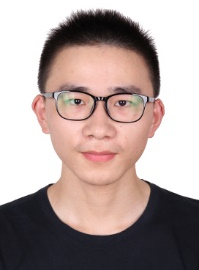
Tao Huang
PhD Student
Institute of Cyber-Systems and Control, Zhejiang University, China
Biography
I am pursuing my Ph.D. degree in Control Engineering, Zhejiang University, Hangzhou, China. My major research interest is Motion Planning and Machine Learning.
Research and Interests
- Motion Planning
- Machine Learning
Publications
- Gang Xu, Yuchen Wu, Sheng Tao, Yifan Yang, Tao Liu, Tao Huang, Huifeng Wu, and Yong Liu. Efficient Multi-Robot Task and Path Planning in Large-Scale Cluttered Environments. IEEE Robotics and Automation Letters, 10:9112-9119, 2025.
[BibTeX] [Abstract] [DOI] [PDF]As the potential of multi-robot systems continues to be explored and validated across various real-world applications, such as package delivery, search and rescue, and autonomous exploration, the need to improve the efficiency and quality of task and path planning has become increasingly urgent, particularly in large-scale, obstacle-rich environments. To this end, this letter investigates the problem of multi-robot task and path planning (MRTPP) in large-scale cluttered scenarios. Specifically, we first propose an obstacle-vertex search (OVS) path planner that quickly constructs the cost matrix of collision-free paths for multi-robot task planning, ensuring the rationality of task planning in obstacle-rich environments. Furthermore, we introduce an efficient auction-based method for solving the MRTPP problem by incorporating a novel memory-aware strategy, aiming to minimize the maximum travel cost among robots for task visits. The proposed method effectively improves computational efficiency while maintaining solution quality in the multi-robot task planning problem. Finally, we demonstrated the effectiveness and practicality of the proposed method through extensive benchmark comparisons.
@article{xu2025emr, title = {Efficient Multi-Robot Task and Path Planning in Large-Scale Cluttered Environments}, author = {Gang Xu and Yuchen Wu and Sheng Tao and Yifan Yang and Tao Liu and Tao Huang and Huifeng Wu and Yong Liu}, year = 2025, journal = {IEEE Robotics and Automation Letters}, volume = 10, pages = {9112-9119}, doi = {10.1109/LRA.2025.3592146}, abstract = {As the potential of multi-robot systems continues to be explored and validated across various real-world applications, such as package delivery, search and rescue, and autonomous exploration, the need to improve the efficiency and quality of task and path planning has become increasingly urgent, particularly in large-scale, obstacle-rich environments. To this end, this letter investigates the problem of multi-robot task and path planning (MRTPP) in large-scale cluttered scenarios. Specifically, we first propose an obstacle-vertex search (OVS) path planner that quickly constructs the cost matrix of collision-free paths for multi-robot task planning, ensuring the rationality of task planning in obstacle-rich environments. Furthermore, we introduce an efficient auction-based method for solving the MRTPP problem by incorporating a novel memory-aware strategy, aiming to minimize the maximum travel cost among robots for task visits. The proposed method effectively improves computational efficiency while maintaining solution quality in the multi-robot task planning problem. Finally, we demonstrated the effectiveness and practicality of the proposed method through extensive benchmark comparisons.} } - Tao Huang, Yiheng Xue, Zhenfeng Xue, Zheng Zhang, Zhonghua Miao, and Yong Liu. USV-Tracker: A novel USV tracking system for surface investigation with limited resources. Ocean Engineering, 312:119196, 2024.
[BibTeX] [Abstract] [DOI] [PDF]This paper introduces USV-Tracker, a novel tracking system for Unmanned Surface Vehicles (USVs) tailored for practical applications such as surface investigation and target tracking. The system tackles three pivotal challenges: perception robustness, tracking concealment, and planning efficiency. The contributions of this work are manifold: (1) A multi-sensor fusion framework utilizing an Extended Kalman Filter (EKF) to enhance target detection and positioning accuracy, integrating data from cameras, LiDAR, GPS, and IMU sensors. (2) A two-stage path planning algorithm that generates occlusion avoidance trajectories and employs a virtual elastic force constraint to maintain appropriate relative positioning. In dense obstacle environments, the algorithm tends to get closer to the target and incorporates FOV orientation constraints to ensure stable perception. (3) A visibility-aware control strategy that ensures continuous target observability through EKF-based trajectory prediction. Simulations in Gazebo and corresponding physical experiments validate the system’s effectiveness and robustness, demonstrating its applicability in real-world scenarios. The computational workload is managed on a constrained on-board computer, underscoring the system’s practicality.
@article{huang2024usv, title = {USV-Tracker: A novel USV tracking system for surface investigation with limited resources}, author = {Tao Huang and Yiheng Xue and Zhenfeng Xue and Zheng Zhang and Zhonghua Miao and Yong Liu}, year = 2024, journal = {Ocean Engineering}, volume = 312, pages = {119196}, doi = {10.1016/j.oceaneng.2024.119196}, abstract = {This paper introduces USV-Tracker, a novel tracking system for Unmanned Surface Vehicles (USVs) tailored for practical applications such as surface investigation and target tracking. The system tackles three pivotal challenges: perception robustness, tracking concealment, and planning efficiency. The contributions of this work are manifold: (1) A multi-sensor fusion framework utilizing an Extended Kalman Filter (EKF) to enhance target detection and positioning accuracy, integrating data from cameras, LiDAR, GPS, and IMU sensors. (2) A two-stage path planning algorithm that generates occlusion avoidance trajectories and employs a virtual elastic force constraint to maintain appropriate relative positioning. In dense obstacle environments, the algorithm tends to get closer to the target and incorporates FOV orientation constraints to ensure stable perception. (3) A visibility-aware control strategy that ensures continuous target observability through EKF-based trajectory prediction. Simulations in Gazebo and corresponding physical experiments validate the system's effectiveness and robustness, demonstrating its applicability in real-world scenarios. The computational workload is managed on a constrained on-board computer, underscoring the system's practicality.} } - Tao Huang, Zhe Chen, Wang Gao, Zhenfeng Xue, and Yong Liu. A USV-UAV Cooperative Trajectory Planning Algorithm with Hull Dynamic Constraints. Sensors, 23:1845, 2023.
[BibTeX] [Abstract] [DOI] [PDF]Efficient trajectory generation in complex dynamic environments remains an open problem in the operation of an unmanned surface vehicle (USV). The perception of a USV is usually interfered by the swing of the hull and the ambient weather, making it challenging to plan optimal USV trajectories. In this paper, a cooperative trajectory planning algorithm for a coupled USV-UAV system is proposed to ensure that a USV can execute a safe and smooth path as it autonomously advances through multi-obstacle maps. Specifically, the unmanned aerial vehicle (UAV) plays the role of a flight sensor, providing real-time global map and obstacle information with a lightweight semantic segmentation network and 3D projection transformation. An initial obstacle avoidance trajectory is generated by a graph-based search method. Concerning the unique under-actuated kinematic characteristics of the USV, a numerical optimization method based on hull dynamic constraints is introduced to make the trajectory easier to be tracked for motion control. Finally, a motion control method based on NMPC with the lowest energy consumption constraint during execution is proposed. Experimental results verify the effectiveness of the whole system, and the generated trajectory is locally optimal for USV with considerable tracking accuracy.
@article{huang2023usv, title = {A USV-UAV Cooperative Trajectory Planning Algorithm with Hull Dynamic Constraints}, author = {Tao Huang and Zhe Chen and Wang Gao and Zhenfeng Xue and Yong Liu}, year = 2023, journal = {Sensors}, volume = 23, pages = {1845}, doi = {10.3390/s23041845}, abstract = {Efficient trajectory generation in complex dynamic environments remains an open problem in the operation of an unmanned surface vehicle (USV). The perception of a USV is usually interfered by the swing of the hull and the ambient weather, making it challenging to plan optimal USV trajectories. In this paper, a cooperative trajectory planning algorithm for a coupled USV-UAV system is proposed to ensure that a USV can execute a safe and smooth path as it autonomously advances through multi-obstacle maps. Specifically, the unmanned aerial vehicle (UAV) plays the role of a flight sensor, providing real-time global map and obstacle information with a lightweight semantic segmentation network and 3D projection transformation. An initial obstacle avoidance trajectory is generated by a graph-based search method. Concerning the unique under-actuated kinematic characteristics of the USV, a numerical optimization method based on hull dynamic constraints is introduced to make the trajectory easier to be tracked for motion control. Finally, a motion control method based on NMPC with the lowest energy consumption constraint during execution is proposed. Experimental results verify the effectiveness of the whole system, and the generated trajectory is locally optimal for USV with considerable tracking accuracy.} } - Tao Huang, Zhenfeng Xue, Zhe Chen, and Yong Liu. Efficient Trajectory Planning and Control for USV with Vessel Dynamics and Differential Flatness. In 2023 IEEE/ASME International Conference on Advanced Intelligent Mechatronics (AIM), pages 1273-1280, 2023.
[BibTeX] [Abstract] [DOI] [PDF]Unmanned surface vessels (USVs) are widely used in ocean exploration and environmental protection. To ensure that USV can successfully perform its mission, trajectory planning and motion tracking are the two most critical technologies. This paper proposes a novel trajectory generation and tracking method for USV based on optimization theory. Specifically, the USV dynamic model is combined with differential flatness, so that the trajectory can be generated by dynamic RRT* in a linear invariant system expression form under the objective of optimal boundary value. We adjust the trajectory through local optimization to reduce the number of samples and improve efficiency. The dynamic constraints are considered in the optimization process so that the generated trajectory conforms to the kinematic characteristics of the under-actuated hull, making tracking easier. Finally, motion tracking is added with model predictive control under a sequential quadratic programming problem. Simulated results show that the planned trajectory is more consistent with the kinematic characteristics of USV, and the tracking accuracy remains at a higher level.
@inproceedings{huang2023etp, title = {Efficient Trajectory Planning and Control for USV with Vessel Dynamics and Differential Flatness}, author = {Tao Huang and Zhenfeng Xue and Zhe Chen and Yong Liu}, year = 2023, booktitle = {2023 IEEE/ASME International Conference on Advanced Intelligent Mechatronics (AIM)}, pages = {1273-1280}, doi = {10.1109/AIM46323.2023.10196111}, abstract = {Unmanned surface vessels (USVs) are widely used in ocean exploration and environmental protection. To ensure that USV can successfully perform its mission, trajectory planning and motion tracking are the two most critical technologies. This paper proposes a novel trajectory generation and tracking method for USV based on optimization theory. Specifically, the USV dynamic model is combined with differential flatness, so that the trajectory can be generated by dynamic RRT* in a linear invariant system expression form under the objective of optimal boundary value. We adjust the trajectory through local optimization to reduce the number of samples and improve efficiency. The dynamic constraints are considered in the optimization process so that the generated trajectory conforms to the kinematic characteristics of the under-actuated hull, making tracking easier. Finally, motion tracking is added with model predictive control under a sequential quadratic programming problem. Simulated results show that the planned trajectory is more consistent with the kinematic characteristics of USV, and the tracking accuracy remains at a higher level.} } - Zhe Chen, Tao Huang, Zhenfeng Xue, Zongzhi Zhu, Jinhong Xu, and Yong Liu. A Novel Unmanned Surface Vehicle with 2D-3D Fused Perception and Obstacle Avoidance Module. In 2021 IEEE International Conference on Robotics and Biomimetics (ROBIO), pages 1804-1809, 2021.
[BibTeX] [Abstract] [DOI] [PDF]Unmanned surface vehicles (USVs) are important intelligent equipment that can accomplish various tasks on open area marine. During operation, environmental perception and obstacle avoidance is of vital significance to its autonomy. In this paper, we propose a novel USV equipped with fused perception and obstacle avoidance module that contains robust perception, localization and effective obstacle avoidance strategy. The new module is named Three-Dimensional Perception Module (PMTD), which utilizes camera and LiDAR to integrate multi-dimensional environmental information. It is able to detect, identify and track target objects in the process of autonomous travel. The localization precision achieves a centimeter-level with GPS and IMU devices. Meanwhile, the obstacle avoidance strategy allows the USV to efficiently keep away from static and dynamic floating objects in water areas. Through real-world experiments, we show that with the help of the proposed module, the USV can complete stable and autonomous operation and obstacles avoidance path planning even without any manual intervention. This indicates the strong ability of the module in autonomous driving for USVs.
@inproceedings{chen2021anu,
title = {A Novel Unmanned Surface Vehicle with 2D-3D Fused Perception and Obstacle Avoidance Module},
author = {Zhe Chen and Tao Huang and Zhenfeng Xue and Zongzhi Zhu and Jinhong Xu and Yong Liu},
year = 2021,
booktitle = {2021 IEEE International Conference on Robotics and Biomimetics (ROBIO)},
pages = {1804-1809},
doi = {https://doi.org/10.1109/ROBIO54168.2021.9739449},
abstract = {Unmanned surface vehicles (USVs) are important intelligent equipment that can accomplish various tasks on open area marine. During operation, environmental perception and obstacle avoidance is of vital significance to its autonomy. In this paper, we propose a novel USV equipped with fused perception and obstacle avoidance module that contains robust perception, localization and effective obstacle avoidance strategy. The new module is named Three-Dimensional Perception Module (PMTD), which utilizes camera and LiDAR to integrate multi-dimensional environmental information. It is able to detect, identify and track target objects in the process of autonomous travel. The localization precision achieves a centimeter-level with GPS and IMU devices. Meanwhile, the obstacle avoidance strategy allows the USV to efficiently keep away from static and dynamic floating objects in water areas. Through real-world experiments, we show that with the help of the proposed module, the USV can complete stable and autonomous operation and obstacles avoidance path planning even without any manual intervention. This indicates the strong ability of the module in autonomous driving for USVs.}
}